
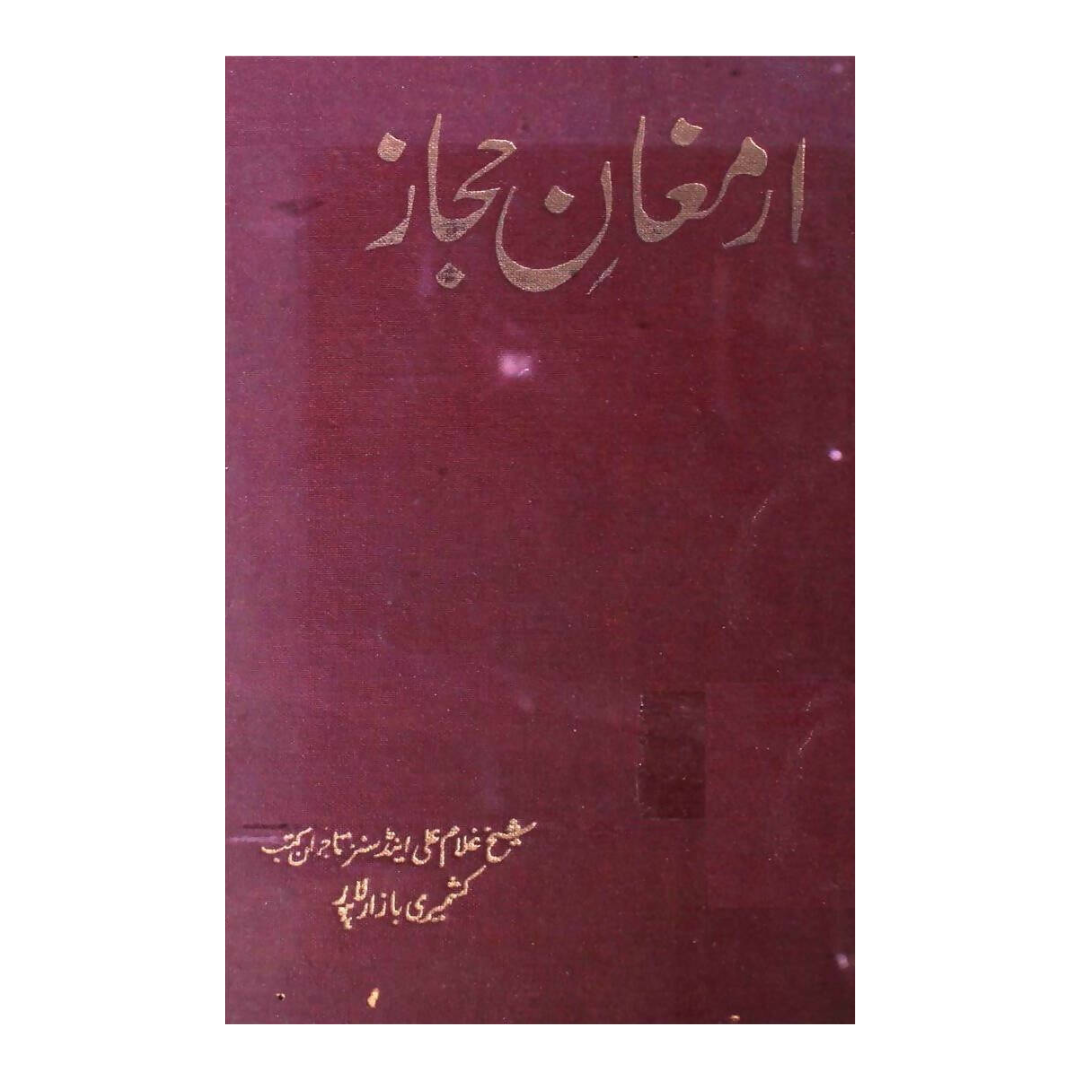
Description
Armughan-e-Hijaz (“Gift from the Hijaz”) is the final, posthumous collection of poetry by Allama Iqbal, published in 1938, shortly after his death. The work contains both Persian and Urdu verses and reflects his more introspective and personal final years, with themes that remain consistent with his previous works but are treated with fresh insight. It was conceived as a gift to be presented in the Hijaz during a pilgrimage he was unable to complete due to illness.
Key aspects of the work
- Final and incomplete work: This was Iqbal’s last work, published a few months after his death. It is incomplete, as the poet intended to fill in certain gaps after his planned Hajj pilgrimage to Mecca.
- Bilingual: The collection includes poems in both Persian and Urdu.
- Themes: The themes are familiar from Iqbal’s other works, including a critique of human evils, devotion to the Prophet Muhammad, and a desire for justice. However, the treatment is more personal and reflective.
- Introspective tone: The poetry is characterized by a more withdrawn and introspective tone, appearing to be a final look at the world before departing it.
- Original intent: The title, Armughan-e-Hijaz, meaning “Gift from the Hijaz,” reflects Iqbal’s original plan to present it as a gift to his countrymen after returning from his pilgrimage.
Reviews
There are no reviews yet.